Image of a crash test dummy standing in front of a test vehicle in a proving ground facility

Passive Sicherheitssysteme

Die Verbesserung der Fahrzeugsicherheit weltweit hat in der Automobilindustrie höchste Priorität.


Dazu gehören die Entwicklung und Lieferung zuverlässiger Rückhaltesysteme sowie fortschrittliche Simulationen zur Bewertung der Sicherheit von Innenräumen, Insassen und Fußgängern.

Lassen Sie uns gemeinsam eine sicherere Zukunft schaffen.

Picture of Thomas Kühl, Head of Safety Engineering Services in Alzenau

Thomas Kühl

Head of Passive Safety Systems

System Engineering

Passive Sicherheitssysteme

  • Sicherheitsversuche
  • Simulation CAE-Crashmodell
  • Algorithmus-Anpassungen Airbag Control Unit
  • Integrierte Sicherheitssysteme
Illustration of passive safety systems covering various topics such as passive safety systems, simulation, and testing

Simulation und Test

  • CAE Model Aufbau & Parameterstudie
  • Pulse aus der Simulation der Crash-Struktur
  • Aufbau und Validierung von Komponenten
  • Status in der Insassen-simulation und im Test
  • Crashtest für die finale Freigabe       
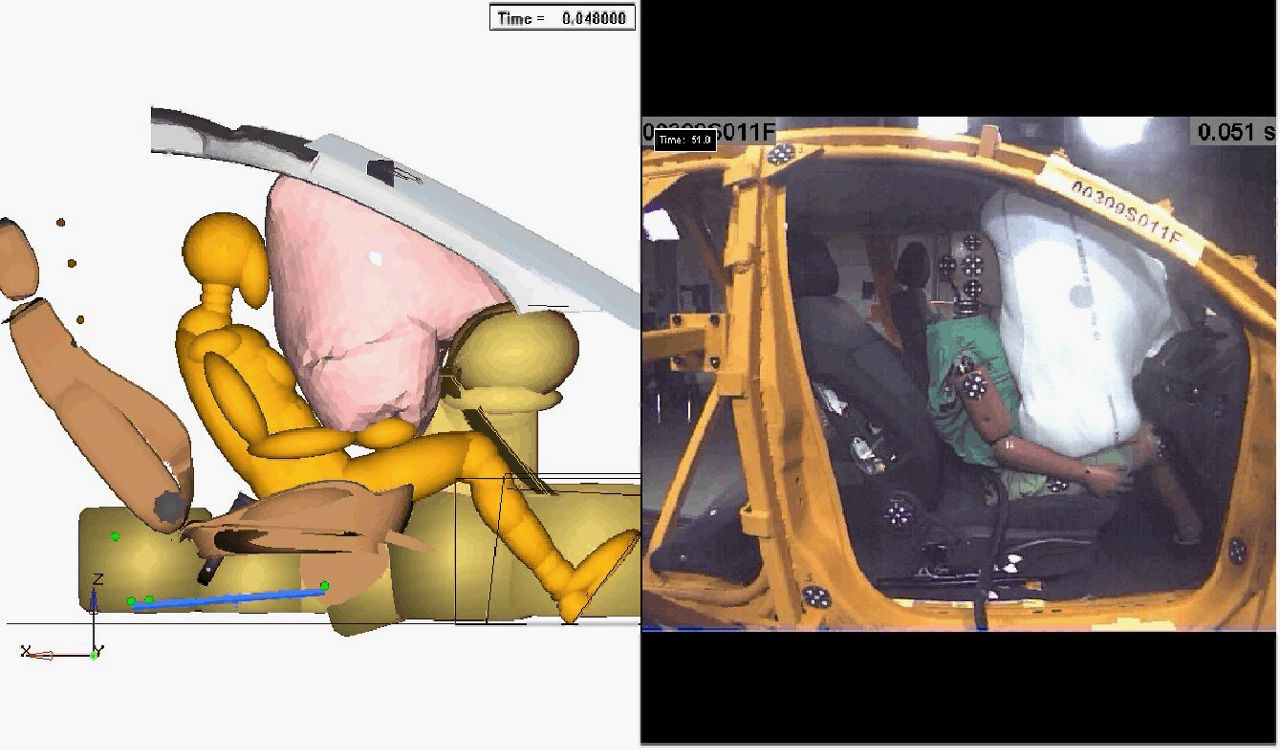
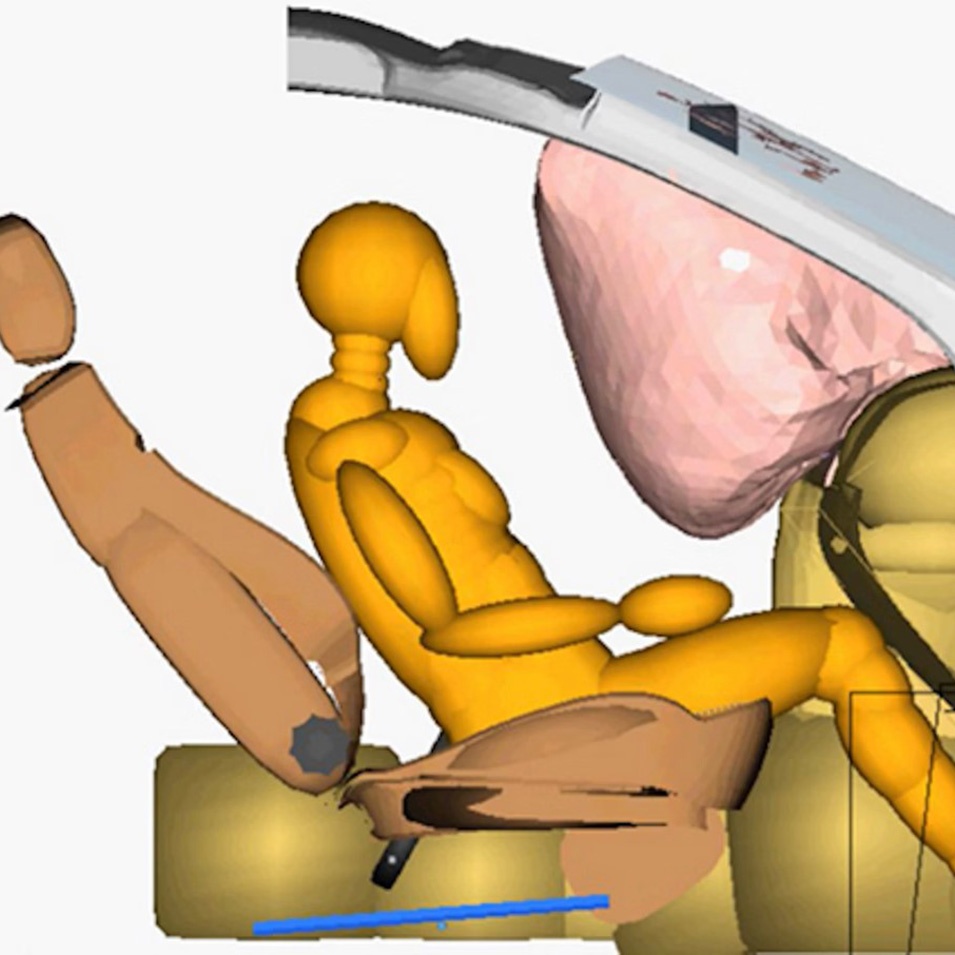
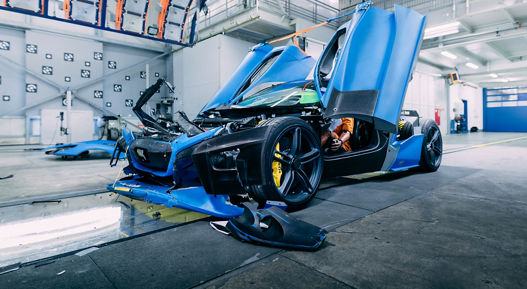
Picture of a 3D animation and real-life crash test comparison In the field of system engineering for automotive safety. Safety testing is complemented by advanced CAE crash models, enabling precise simulation of impact scenarios. Algorithm adaptation for the Airbag Control Unit ensures accurate deployment timing and integration with other protective measures. Modern vehicles rely on integrated safety systems, where simulation and physical testing work hand in hand. This includes CAE model set-up and parameter studies to predict crash behavior, crash structure pulse simulations to analyze energy absorption, and component set-up with rigorous validation. Occupant simulation and testing are continuously monitored to verify restraint performance, culminating in full-scale crash tests for final release and certification.
0:6

Simulation

Numerische Simulation

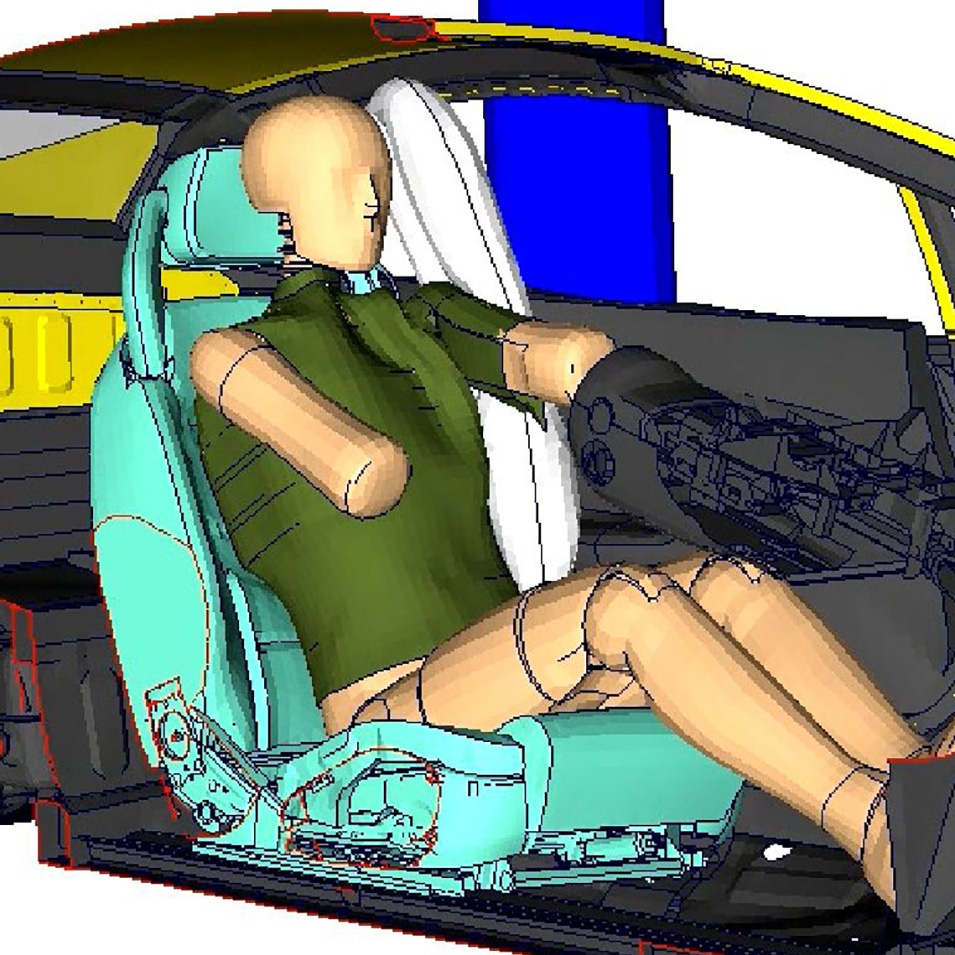
3D visualization of a crash test dummy inside a vehicle. The numerical simulation workflow evaluates interior cockpit and greenhouse head-impact scenarios to understand injury metrics and optimize trim and restraint systems. Beyond in-cabin safety, pedestrian protection is assessed through parametric models that analyze contact conditions, energy absorption, and compliant front-end designs. To address vehicle dynamics in extreme events, rollover sensor and actuator design is simulated to ensure timely detection, robust signal processing, and reliable deployment of protective mechanisms, thereby improving overall system performance and occupant outcomes.
  • Insassen- und Crash-CAE-Simulation
  • Innenraum, Cockpit Kopfanprall
  • Fußgängerschutz
  • Rollover Sensor- und Aktuatoren Abstimmung    

Innenraum Simulation

3D visualization of a crash test dummy inside a vehicle to analyze cockpit head protection and optimize greenhouse trim parts to enhance passenger safety and comfort. Additionally, parameter variation is applied to evaluate different design scenarios and improve overall performance. Actuator design and functionality are also key elements, ensuring precise control and realistic simulation of impact forces during crash events.
  • Schutz vor Kopfanprall gegen das Cockpit
  • Optimierung von Innenraumverkleidungsteilen
  • Parameter Variation
  • Auslegung der Aktuatoren und der Funktionen

Überrollschutz

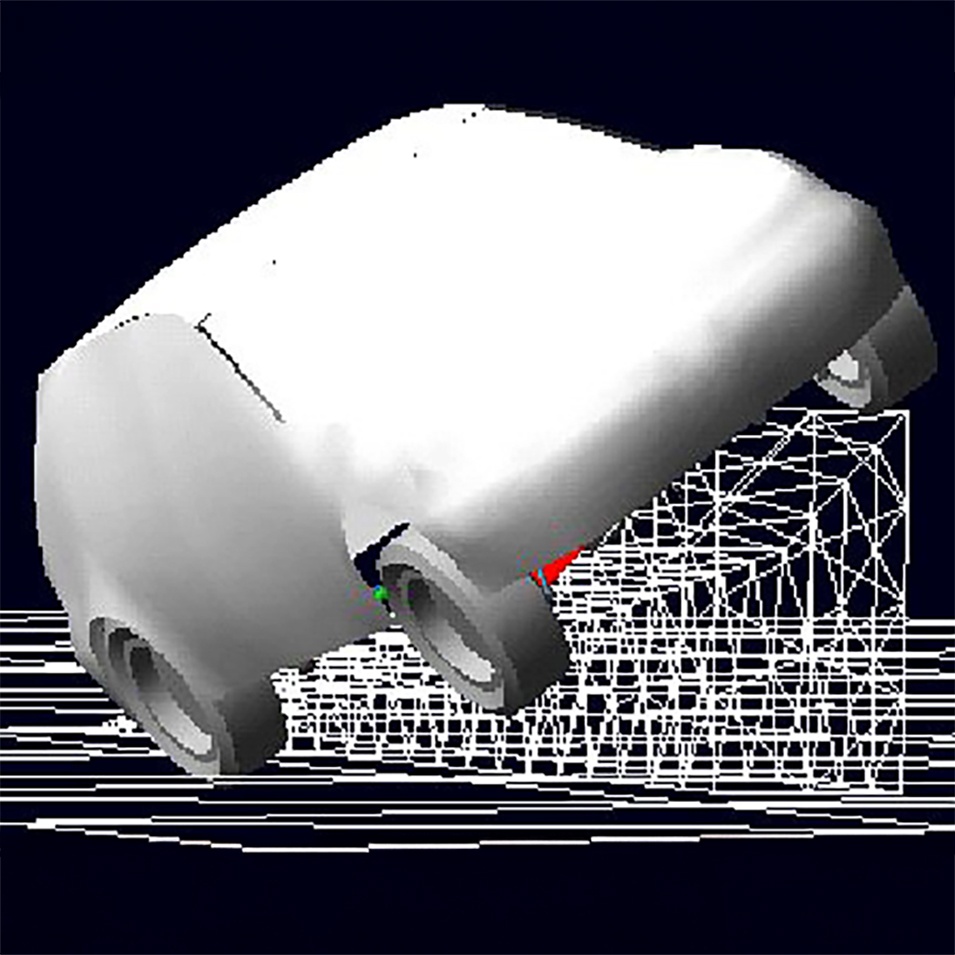
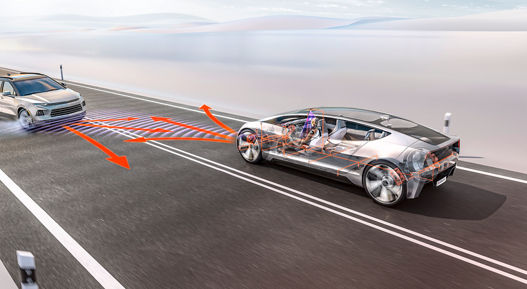
3D visualization of the vehicle for rollover protection analysis to study roll behavior under parameter variation, enabling engineers to predict dynamic responses in different scenarios. Various rollover cases and environmental conditions are simulated to assess structural integrity and occupant safety. Advanced sensing signals feed algorithms that detect critical thresholds, ensuring timely activation of protective measures. The design and function of restraint systems are optimized to provide maximum occupant protection during rollover events, integrating sensor data with robust mechanical performance.
  • Rollover Verhalten mit Parametervariationen
  • Rollover Situationen und Umgebungen
  • Sensorsignale für den Algorithmus
  • Auslegung und Funktion des Rückhaltesystems

Fußgängerschutz

  • Kopf- und Beinschutz
  • Passiver Schutz durch Designanpassungen
  • Parameter Variation
  • Aktive Schutzsysteme
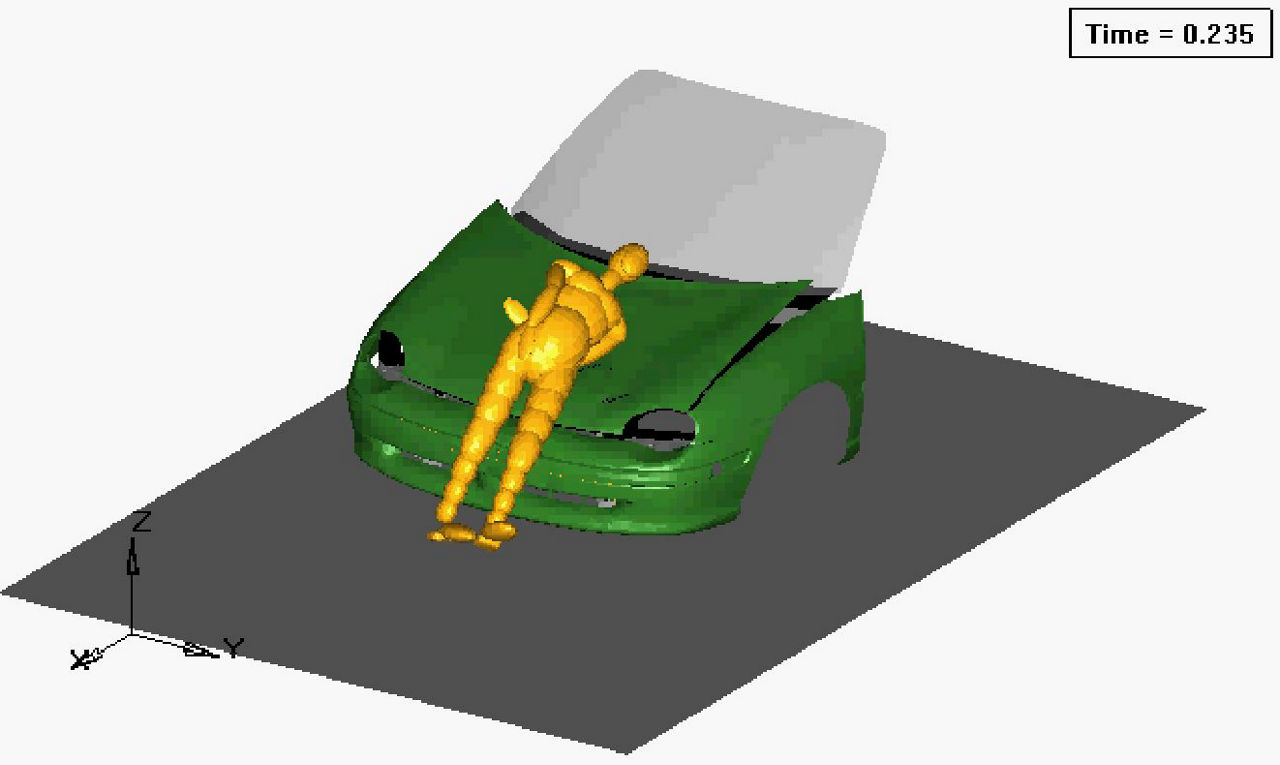
3D visualization of a crash test dummy impacting the vehicle front and hood for pedestrian protection analysis to evaluate head and leg injury risks. Passive protection by design focuses on optimizing structural geometry and material compliance to reduce impact severity. Parameter variation enables engineers to study different configurations and improve energy absorption characteristics. In addition, active protection systems—such as deployable hoods and external airbags—are integrated to further minimize injury potential, combining sensor-driven algorithms with rapid actuation for enhanced pedestrian safety.
0:2

Kontaktieren Sie uns!

Lassen Sie uns besprechen, welches Sicherheitsprojekt wir gemeinsam umsetzen können!
Foto von Thomas Kühl, Leiter der Abteilung für Sicherheitstechnik in Alzenau

Thomas Kühl

Head of Passive Safety Systems

Foto von Uwe Gierath, Vertriebsleiter bei Safety Engineering Services, Alzenau

Uwe Gierath

Head of Sales

Möchten Sie mehr erfahren?

*Sollten das Kontaktformular nicht laden, überprüfen Sie bitte die erweiterten Cookie-Einstellungen, und aktivieren Sie die Funktions-Cookies zum Zwecke des Kontaktmanagements.