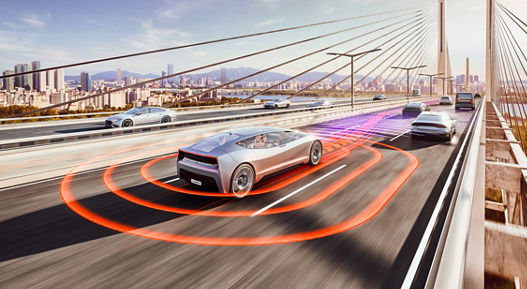
AUMOVIO has an ambitious goal: a future without road traffic accidents. That may sound like science fiction, but it is actually achievable – with safety technologies custom-tailored to every region of the world. And with findings from in-house accident research.
News
Vision Zero: our path to a world without accidents

Galileo Galilei understood that the world turns on its axis. And we know that we turn with it – mostly riding on two, three or four wheels. We cruise through sunny landscapes in a camper van on summer vacation, we cheer on the cyclist “heroes of the road” in the Tour de France, and we take the bus to work every morning. This basic human urge for mobility has its origins in lands bordering the Black Sea. There, the wheel was invented around 4,000 BC as an aid to facilitate transportation: potters came up with the ingenious idea of equipping skid runners with small, rotating clay disks. It took almost 6,000 years for the wheel to evolve into the carriage, and another 400 years before the first motorized vehicle hit the road. But then things really took off: the transformation from the analog automobile to today’s networked, digitally driven vehicles took less than 30 years – in just the blink of an eye on the historical timeline, but a significant step indeed.
Yet we also know that this human urge for mobility takes a tragic toll. Every six seconds, a road accident occurs somewhere in the world in which a person is killed or seriously injured. That means around 1.19 million road fatalities worldwide within a single year. In our high-tech world, however, the goal must be: zero accidents.
AUMOVIO has therefore committed itself to “Vision Zero”: as one of the leading technology companies in the automotive industry, AUMOVIO is doing everything it can to make mobility safer and safer. Thanks to smart applications, software solutions and increasingly intelligent algorithms, cars are already considered permanently connected “smartphones on wheels.” They run on sustainable electricity – and the artificially intelligent voice assistant acts as a travel guide. In the future, they will also glide autonomously through rush hour traffic. In the interest of society, one thing in particular must be achieved: a further significant reduction in the number of accident victims.

“Vision Zero” is admittedly an ambitious goal. In Germany alone, almost 7,000 road accidents still occur every day, despite the many assistance systems on board modern cars. That means almost 1,000 injuries and seven deaths – every day. The number of road accident victims has fallen in most European countries in recent years. But the challenges are not getting any easier as more vehicles take to the roads year after year. Since 2005, the number of cars registered worldwide has almost doubled to around 1.6 billion. Added to this are ever more motorcycles, bicycles, electric bikes and e-scooters sharing the limited space available in urban areas.
More cars, less space – and still zero accidents? How can that be achieved? AUMOVIO pursues a clear mobility strategy that is always focused on people. With a spirit of innovation and invention, the employees of this technology company work every day on new developments that above all help increase safety in a complex world of mobility. AUMOVIO employs around 29,000 engineers, software specialists and IT experts with essential expertise for future innovations.

There are two key factors to making “Vision Zero” a reality. Both are equally important. On the one hand, new technological developments are constantly creating new possibilities. Intelligent algorithms are the new DNA of mobility, while compact high-performance computers are the control centers in an increasingly complex electrical/electronic architecture (E/E architecture). AUMOVIO is among the leaders in series development of such high-performance computers, which in principle control all electronic, digital and physical safety components in the vehicle. And AUMOVIO also develops the corresponding assistance systems.
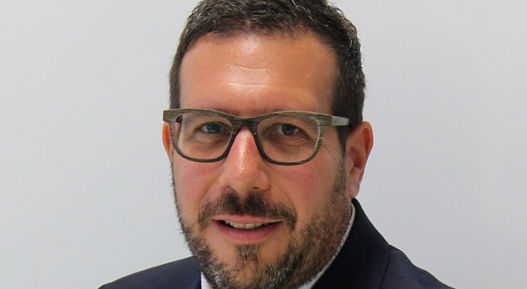
The second key factor to greater road safety is accident research. In recent years, AUMOVIO has established its own department for researching and analyzing traffic accidents worldwide. Only a deep understanding of all facets of the constantly changing accident landscape makes it possible to develop customized safety solutions for every region and every market. This is crucial for reducing accident numbers worldwide and moving ever closer to “Vision Zero”. “Targeted technology solutions can deliver further progress in road safety, bringing us closer to the goal of a world without accidents,” explains Harald Feifel, Head of Accident Research at AUMOVIO, in an interview. “People’s mobility behavior and accident figures differ greatly from region to region. In Europe, and also in the United States, the situation is less dramatic. Here, many innovations in vehicles provide a significant increase in safety. The situation is different in emerging markets.” There, individual solutions are needed.
One example: in many Asian countries, simple, low-cost assistance systems for small motorcycles can achieve significant safety gains – more than a lane keeping assistant for less common premium vehicles. In countries such as Vietnam or India, collisions between motorcycles and cars, as well as between motorcycles themselves, are typical accident scenarios. Such accidents hardly occur in Western countries. There, by contrast, intersections are among the critical accident hotspots. According to a study by the University of Michigan Transportation Research Institute, almost one in three road fatalities in the United States alone loses their life at an intersection – and the situation is similar in many countries. The victims are often pedestrians and cyclists, who inherently travel without protective assistance systems. According to an AUMOVIO evaluation of the German In-Depth Accident Study (GIDAS) and accident data from the Federal Statistical Office of Germany (DESTATIS), turning vehicles in Germany cause around 20 percent of all accidents involving cyclists and pedestrians, respectively.

This is where the issue of “concealed road users” is crucial – for example, a cyclist hidden from view by a truck. And the problem is not limited to unclear traffic situations at intersections. Pedestrians in particular are often obscured along the roadside by parked vehicles, trees or a truck pulling out of a driveway. Such situations require sensor systems that integrate the infrastructure – and also help connect vehicles with each other. In this way, using the principle of “collective perception,” a car’s sensors can transmit the positions of pedestrians or cyclists to the occupants of another vehicle who would otherwise have overlooked them.

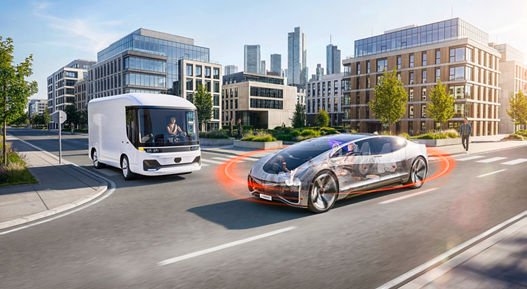
This is also where AUMOVIO’s current research comes in – and with it product development. Systems in and on vehicles can protect pedestrians and cyclists: for example, the turn assist system for trucks. Or brakes like those in the Corner Module, into which various assistance functions for greater safety can be integrated. Or assistance systems based on radar, lidar and cameras, combined with high-performance computers in vehicles and supplemented by the infrastructure, that detect and analyze traffic situations in real time.

AUMOVIO creates precisely tailored, practical and effective technology innovations, supported by reliable data from its own accident research. And so the world keeps turning – and we turn with it. On the way to a future without road traffic accidents, in which “Vision Zero” has become reality.