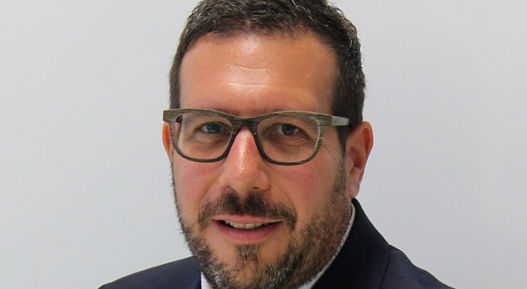
AUMOVIO is making great strides for a world without accidents. But what specific steps must be taken to achieve the ambitious goal of “Vision Zero”? Harald Feifel, head of AUMOVIO’s own accident research, highlights typical accident scenarios in different regions around the world. He also explains which technologies help to save lives.
News
“Well on our way to a world without accidents”

Mr. Feifel, let us take a look at some alarming numbers. About every 30 seconds, a traffic accident takes place somewhere in the world in which somebody dies. That equates to about 1.19 million road fatalities worldwide in one year...
Yes, the figures do not lie. But at AUMOVIO we are helping to bring these numbers down. This is why in accident research we analyze every relevant accident scenario. Our data and recommendations then flow directly into innovation research and thus into new technology solutions.
AUMOVIO is pursuing an ambitious goal for a world without accidents: “Vision Zero.” How can it be achieved?
“Vision Zero” is an ambitious goal, that is true. But it is not science fiction. With targeted technological solutions, progress can continue to be made in road safety, bringing us closer to the goal of a world without accidents. People’s mobility behavior and accident figures vary greatly from region to region. In Europe and the USA, the situation is less dramatic, as there are many innovations in vehicles that significantly increase safety. The situation is different in Africa, South America and Asian countries. More strongly emerging countries, such as India and Vietnam, have a lot further to go than Europe. There are a number of reasons for this.
What are the reasons?
The United Nations’ World Health Organization has identified five main reasons why the number of accidents is significantly higher in emerging countries: a lack of seatbelts or an unwillingness to use them; driving under the influence of alcohol; driving at an inappropriate speed; a lack of child safety seats and riding a motorcycle without a helmet.
How can these differences in safety between industrialized nations and emerging countries like India be resolved?
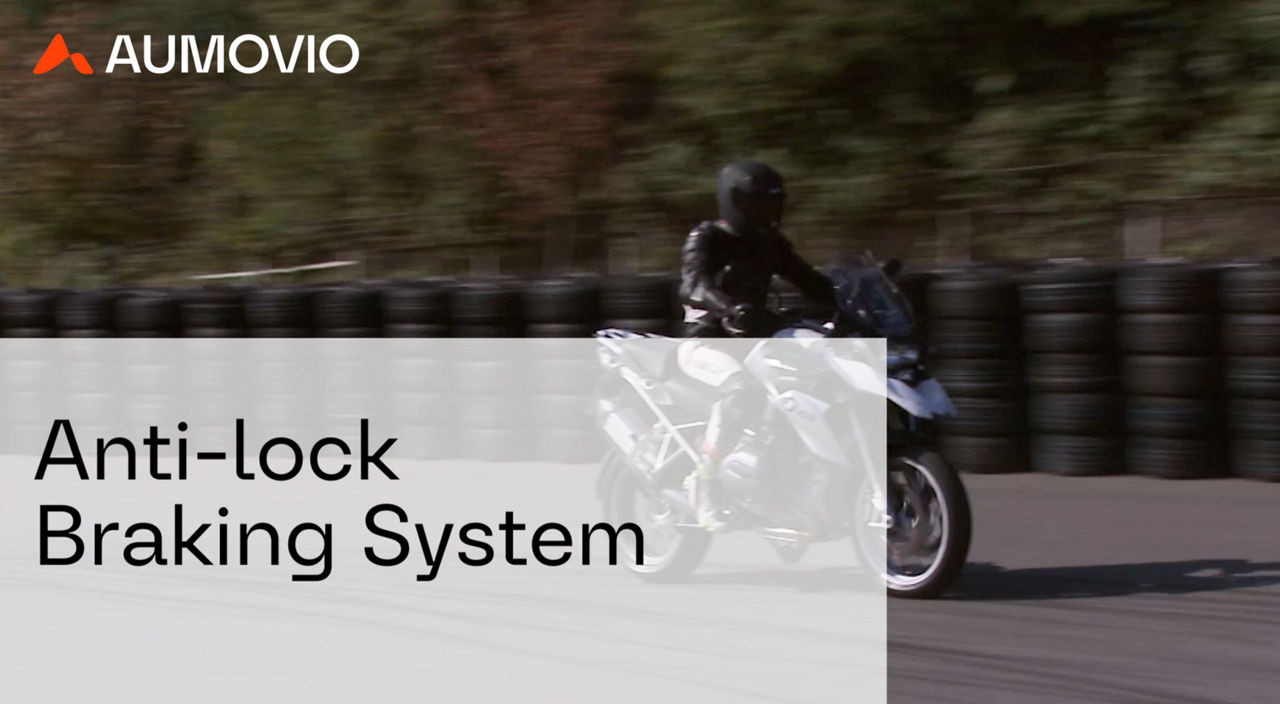
Before we talk about the prevalence of emergency brake assist systems in India, we first need to analyze the situation very closely and look at what the typical accident scenarios are in India. The results show that most accidents involve motorcycles with other passenger cars. Motorcycles are also often involved in accidents with other motorcycles in India and Southeast Asia. These scenarios are less significant in the western world. Therefore, the aim is to make motorcycles safer, such as with a motorcycle ABS system followed by a blind spot assist. AUMOVIO has been offering these systems to western markets for some time.
Why are these systems not gaining traction in emerging markets?
The decisive factor is the cost: can customers ultimately afford greater safety? Also, which technology makes sense? In many countries, customers are not in a position to pay extra for a lane departure warning system, for example. And this would make very little sense in many countries, as often no lanes are marked.
So what is the solution?
First of all, policymakers and society at large need to take simple measures to reduce the number of accidents – for example, by wearing a helmet when riding a motorcycle, buckling up when traveling in a car and putting a child safety seat on the back seat. These must also be consistently enforced. As a technology company, at first glance, have no direct influence on this. But by simply taking easy-to-understand measures such as these, we will be able to quickly reduce the drastic numbers we are seeing currently: 1.19 million road deaths and many millions of injuries. We contribute by developing cost-effective systems for emerging markets.

Which safety systems are suitable for emerging markets as a first step?
Basic technologies. At the control level, ABS and ESC are now gaining ground in emerging markets as well, which is definitely a good thing! AUMOVIO has helped to develop both of these technologies, which are responsible for significant reductions in the number of accidents. Another technology is ABS for motorcycles, especially for small classes below 125 cc, which make up the majority of two-wheelers in emerging countries. This is also something we offer.
How does AUMOVIO’s internal accident research contribute to such developments?
First of all, we provide data that shows which technologies could help and where. For each market, we can say exactly what influence each accident scenario has on the accident figures. In Asian markets, for example, many motorcycles collide with cars that are changing lanes. This scenario only accounts for a very small proportion of the total number of accidents in western countries, for example.
In addition, accident data plays a key role when it comes to further optimizing our safety systems and components – as was the case, for example, with our latest radar generation. These provide valuable insights into which types of accidents occur most frequently in which situations – and how they can best be addressed. We use this data to enhance the performance and specifications of our components.
What typical accident scenarios in western countries cannot yet be completely avoided?
Here in Europe, “car versus car” is the most serious accident scenario with fatal consequences. This is where our technology solutions come in. We can now prevent a lot of accidents from taking place, thanks to lane departure warning systems and blind spot detection systems, for example, emergency brake assists and fatigue detection. Our accident research has determined that distracted drivers looking at their cell phones are a cause of accidents that should not be underestimated.
That goes without saying, does it not?
Yes, that sounds predictable, but it needs to be considered from a different perspective. This is why we also employ traffic psychologists to understand why people behave the way they do in certain situations. Distraction alone, for example, does not cause accidents. The issue of “distraction” only becomes serious in combination with a driving error, such as excessive speed or insufficient distance from the car in front, or with a limitation due to alcohol consumption or overtiredness, for example. On the basis of this knowledge, appropriate technologies can be used.
Accident victims are often not sitting in a car but are instead riding a bicycle or moving through traffic as pedestrians.
This is also confirmed by our accident research: the proportion of vulnerable road users involved in accidents is rising in parallel with the decline in the number of serious injuries and fatalities in cars. This is where we come in with targeted research and new developments.

Intersections in particular are considered critical accident locations, especially for vulnerable road users.
Correct. Many fatal accidents take place at intersections. Whether this is due to a truck driver failing to see a cyclist when turning, or because several vehicles obstruct each other’s view of individual road users. We see huge potential for greater safety here. We offer surround radars that provide an even more accurate picture of traffic at intersections – and allow dangerous situations to be anticipated and prevented.
Is that enough to prevent accidents at intersections?
No. Anyone who has ever stood at a busy intersection in a major city knows how complex the situation is. A major challenge at intersections are road users who are obscured by objects and therefore not visible to cameras or radars. One way to address this is so-called vehicle-to-vehicle communication, for which we provide telematics units, for example. This means that vehicles in the immediate vicinity exchange information directly via Wi-Fi about the road users they detect, such as cyclists and pedestrians. In this way, vulnerable road users like cyclists and pedestrians can be better protected at intersections.
AUMOVIO now uses innovative technologies not only in vehicles, but also in infrastructure. Intelligent intersections communicate with vehicles and reduce the level of risk associated with an accident hotspot.
In general, we need to look beyond the cockpit in order to significantly reduce the number of accidents. Smart networks consisting of vehicles, automotive infrastructure such as intelligent intersections and even the cell phones of passers-by will analyze difficult traffic situations in real time and thus help prevent accidents.
Until such systems become widespread, accidents will not be entirely preventable...
No, accidents will continue to happen for the time being – but there will be less and less of them. This is also crucial for our “Vision Zero”: if an accident cannot be avoided, we can still mitigate its consequences. Accident research and innovation research deal very closely with the accident itself: how can a passenger car be brought safely to a standstill after a collision? How can we influence the consequences of a collision in order to reduce or divert the acting forces? Airbags are the most prominent example. But pedestrian protection systems are also crucial. The integration of active and passive safety is important here. It was with this in mind, for example, that the hood was developed which rises in the event of a collision with a vulnerable road user and thus helps to cushion more serious injuries.

At the same time, more and more people around the world are buying more and more cars. The trend is in fact working against the Vision Zero goal.
Fortunately, the number of road users is not the determining factor. Of course, the task of detecting, analyzing and directing the movements of very different road users in such a way that fewer and fewer accidents occur is becoming increasingly challenging. But that is what technology companies like AUMOVIO are here for: to develop the best custom solutions for all scenarios that arise. To do this, we need the data and analysis from accident research. For example, we are currently working closely with our partner Aurora. The aim is to industrialize a commercially scalable, autonomous truck system and get it onto the roads in the USA. To ensure that driverless trucks are safe on the road, we are looking, for instance, at what requirements a truck comes across on the highways. By doing so, we are providing valuable information that is incorporated into the work of our developers involved in the project.
I can say that, thanks to our technologies, we are well on our way to a world without road traffic accidents – our Vision Zero.