More predictable transportation through autonomous driving

Autonomous trucks

Autonomous trucks are safe, scalable, and ready for the road

Autonomous driving in freight transportation requires more than individual components. It requires the interaction of sensors, computing power, software, vehicle architecture, and safety concepts. We develop the technologies the technologies and system expertise needed to make this possible.

Discover how autonomous commercial vehicles perceive their environment, process information, and execute safe driving maneuvers, and how individual technology building blocks become an integrated system.
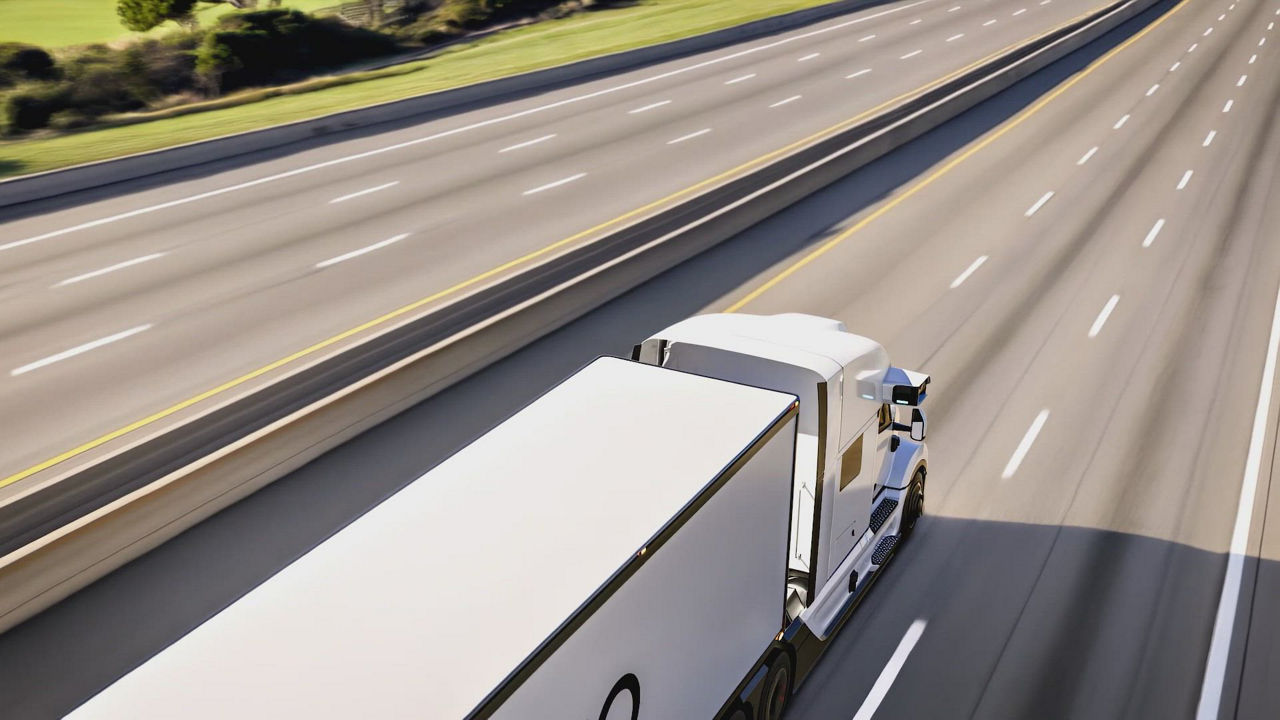

Video about autonomous driving

For vehicle manufacturers and development partners

For vehicle manufacturers and development partners

Are you looking to integrate autonomous driving functions into a robust, verifiable, and scalable vehicle architecture? Learn how we can support you from system design and integration through preparation for industrial processes.

For fleet operators and logistics companies

For fleet operators and logistics companies

Would you like to understand which use cases may benefit from autonomous driving for commercial vehicles and what this means for safety, availability, and operational integration? Explore the technological foundations and potential benefits for fleet operations.

Greater transportation capacity requires new answers

Autonomous commercial vehicles can provide support where transportation is regular, predictable, and suitable for automation.

Freight transportation faces several challenges: transportation volumes are growing, driver resources are limited, and requirements for safety, efficiency, and sustainability are increasing. Autonomous commercial vehicles can provide support where transportation is regular, predictable, and suitable for automation.

This raises an important question, especially on recurring routes such as port logistics, plant transportation, or hub-to-hub operations: How can autonomous driving functions be safely integrated into vehicle operations? Vehicle manufacturers need scalable system architectures and reliable industrial implementation. Fleet operators also require predictable processes, high availability, and integration into existing logistics and maintenance workflows.

Autonomous driving for commercial vehicles is therefore about more than automated driving. It requires an overall system that brings together vehicle, infrastructure, operational, and safety requirements.

Five potential benefits for freight transportation

Autonomous driving for commercial vehicles can advance freight transportation in several areas. The actual impact depends on the specific use case, technical system design, and operating conditions. Five aspects are particularly important.

Safety

Continuous environmental perception for safe and reliable freight transportation
  • Continuous environmental perception for safe and reliable freight transportation
  • Reduced driver workload on long or monotonous route segments
  • Support for recurring and clearly predictable transportation processes

Predictability

A more reliable foundation for dispatching and capacity planning
  • A more reliable foundation for dispatching and capacity planning
  • Improved predictability of delivery times and transportation chains
  • Consideration of routes, weather, infrastructure, and operating hours

Scalability

Flexible adjustment of capacity to demand and order peaks
  • Flexible adjustment of capacity to demand and order peaks
  • The option to expand gradually to suitable recurring routes
  • Development of different operating models for different routes and time windows

Driver shortage

Reduced driver workload on suitable route segments
  • Reduced driver workload on suitable route segments
  • Use of existing expertise where it is needed most
  • New roles in supervising, monitoring, and organizing autonomous trips

Vehicle utilization

Less idle time between suitable transportation assignments
  • Less idle time between suitable transportation assignments
  • Better coordination of vehicle availability, maintenance, and delivery schedules
  • Higher utilization on recurring and predictable transportation routes

These benefits do not result from a single function. They require an overall system that understands its environment, assesses situations, acts safely, and monitors its own system status.

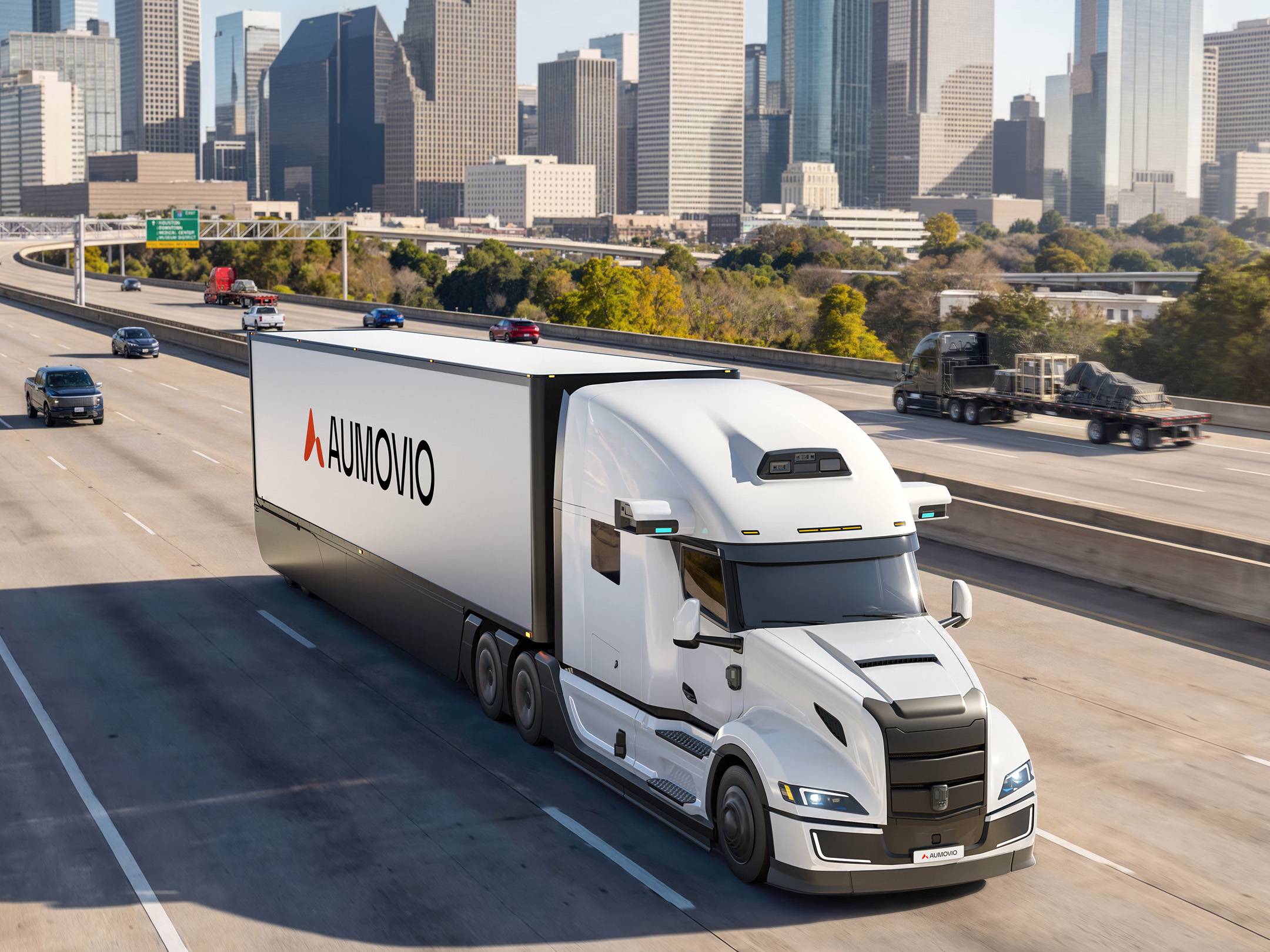
An autonomous truck is driving to a big city.

Autonomy is created through interaction

An autonomous truck must reliably perceive its environment, process large volumes of data within a short time, and derive a safe vehicle response. We view these functions as one integrated system task.

Perceiving the environment

Perceiving the environment

Cameras, radar, and LiDAR provide data on objects, road geometry, distances, and relevant traffic situations. The sensor information is combined to create the most consistent possible model of the environment.

Processing information

Processing information
Multiple high-performance computers (HPCs) process sensor data in real time. The system identifies situations, assesses potential risks, and calculates suitable driving maneuvers.

Acting safely

Acting safely

The calculated action is executed through the driving function. This includes steering, acceleration, braking, and other functions required for the safe movement of the commercial vehicle.

Helping the truck understand its environment

An autonomous commercial vehicle must continuously and reliably perceive its surroundings. A single sensor is not sufficient. Cameras, radar, and LiDAR provide different types of information and complement one another.

Cameras capture visual features such as lane markings, traffic signs, and objects. Radar provides information on distances and movement, among other data, and can continue to supply important information when visibility is limited. LiDAR can additionally capture the environment by measuring distances and structures.

Only by combining sensor data can the system achieve a comprehensive perception of the traffic environment. Sensor fusion brings the information together and checks it for consistency. This provides the foundation for continuous environmental understanding, meaning a current representation of the surroundings.

Perception under different conditions

Rain, fog, nighttime conditions, and glare place particularly demanding requirements on environmental perception. A robust system design therefore considers different sensor principles, their respective performance, and their integration into the vehicle architecture.

The positioning of sensors on the truck is also critical. Sensors must cover the relevant area, be mechanically and thermally integrated into the vehicle, and remain accessible for diagnostics, maintenance, and replacement when required.

Learn more about radar technology and camera technology.

The data center on board

Autonomous trucks generate and process large volumes of sensor data. Central computing resources must combine this information in real time, assess situations, and derive suitable driving maneuvers.

High-performance computers perform key tasks within the automated driving system. They provide the required computing power and enable multiple functions to be processed in parallel.

Performance designed for commercial vehicles

Computing power alone is not enough. The hardware must be designed for robust use in a commercial vehicle. This includes suitable thermal management, a stable power supply, defined communication paths, and an architecture that can be integrated into the vehicle’s electrical/electronic architecture.

Depending on the system concept, computing units can process tasks such as environmental perception, situation assessment, planning, and vehicle control separately or within coordinated functional chains. Parallel computing architectures support the monitoring and safeguarding of safety-critical functions.

From sensor data to driving maneuver

  • Data acquisition: sensors provide information about the environment.
  • Processing: computing units combine and prepare the data.
  • Situation assessment: the system identifies relevant objects, movements, and traffic situations.
  • Decision: potential driving maneuvers are assessed and prioritized.
  • Vehicle response: the driving functions execute the decision accordingly.

Learn more about high-performance computers for autonomous driving.

Data acquisition: sensors provide information about the environment.

Safety is not added later. It is engineered from the start.

For autonomous commercial vehicles, safety must be embedded in the system architecture from the outset. We call this “Safety by design.” It applies to sensors, computing power, software, communication paths, and vehicle functions. The goal is a system design that detects faults, assesses their impact, and triggers an appropriate response.

What happens if a component fails?

A safety-oriented system continuously monitors its own status. If it detects a deviation in a sensor, computing unit, or communication path, it must assess the situation and initiate the appropriate response.

Depending on the system architecture, redundant functions may support limited continued operation. If safe continued operation is not possible, the system initiates a defined maneuver designed to minimize risk. It considers the available vehicle functions, the current driving situation, and the environment to bring the vehicle to the safest possible state.

The safety chain includes several steps

The safety chain includes several steps:

  • Detect faults and deviations
  • Continuously monitor system status
  • Design relevant functions with redundancy or diversity
  • Evaluate available safe courses of action
  • Execute a defined maneuver designed to minimize risk
  • Bring the vehicle to a safe state

Considering the complete functional chain

Safety from the start does not end at an individual control unit. Perception, situation assessment, planning, steering, braking, power supply, and communication must be considered as one connected functional chain.

A fail-safe system architecture can use different paths for the regular driving function and its safety backup. The key is to clearly define each function, assess it independently, and validate it under realistic conditions.

Data-driven development for greater robustness

We actively use data-driven development to systematically increase the robustness of autonomous systems. We structure and analyze real-world driving and environmental data, identify critical and rare scenarios, and convert them into reproducible test cases. This allows us to systematically assess relevant situations and identify development needs early.

We use simulations to examine large numbers of complex and rare situations and efficiently compare variants. Combined with real-world data, scenario search, simulation, verification, and testing, this creates a reliable foundation for systematically advancing environmental perception, planning, and vehicle control. This data-driven approach helps make system performance traceable and improve robustness step by step.

Our solutions: vehicle development for autonomous commercial vehicles

Autonomous commercial vehicles require a coordinated overall system. We combine electronics, software, safety, and production expertise to develop robust, integrable solutions for commercial-vehicle applications from individual technology building blocks.

We consider the entire path from environmental perception to a safe driving maneuver, as well as the factors that are critical for industrial implementation: validation, diagnostics, serviceability, scalability, and lifecycle management.

Our solutions: Vehicle development for autonomous commercial vehicles

We develop and integrate sensor solutions for reliable perception of the vehicle environment. These include cameras, radar, and LiDAR, as well as the required interfaces and integration concepts.

Computing platforms process sensor data, support situation assessment, and provide the foundation for automated driving functions. Performance, thermal management, power supply, and fail-safe design must work together.

Autonomous driving functions require an electrical/electronic architecture that reliably connects data, computing resources, and vehicle functions. We consider requirements for communication, power supply, control, and integration.

Hardware and software must function as one overall system. We support the coordination of sensors, perception, planning, control, and vehicle functions across defined interfaces.

Safety requirements are incorporated early in development. This includes fault analysis, monitoring, redundancy, and defined fallback strategies for the relevant use case.

Autonomous systems must be examined in simulations, on test benches, and in real driving situations. Data-driven methods help systematically assess scenarios and provide traceable evidence throughout development.

An autonomous driving function becomes a usable solution only when it can be reliably integrated into vehicle platforms and industrial processes. We combine development and production perspectives from the outset.

Commercial vehicles must perform throughout their entire operating life. We therefore consider diagnostics, maintenance and service concepts, and continued system development across the complete lifecycle.

Perceive, compute, decide, act, safeguard, validate, and scale: we bring together the expertise required for every step.

Advancing autonomous driving for commercial vehicles together

Autonomous driving for commercial vehicles raises different questions for vehicle manufacturers, development partners, and fleet operators. However, the technical foundation is the same: an integrated system that is safe, robust, and suitable for the relevant use case.

Integrating autonomous systems into vehicles together

Integrating autonomous systems into vehicles together

For vehicle manufacturers and development partners, the objective is to integrate autonomous driving functions into existing or new vehicle platforms. This requires alignment between the system architecture, sensors, computing power, actuators, and safety concept.

We support you in combining technology building blocks into an overall system and bringing together the requirements of development, validation, and industrialization.

This includes:

  • Development and integration of hardware and software building blocks
  • Scalable system architectures for different vehicle platforms
  • Alignment of sensors, computing power, actuators, and electrical/electronic architecture
  • Safety concepts, redundancy, and defined fallback strategies
  • Validation and verification in simulation, laboratory, and vehicle environments
  • Preparation for industrial processes and series-production requirements
  • Collaboration across the entire development lifecycle
More predictable transportation through autonomous driving

More predictable transportation through autonomous driving

For fleet operators and logistics companies, the central question is where autonomous commercial vehicles can make a tangible contribution. Use cases with recurring routes, clearly defined operating processes, and suitable infrastructure are particularly relevant.

Autonomous driving for commercial vehicles can open up new possibilities for transportation planning and organization. This requires a system designed for safety, high technical reliability, and suitable integration into dispatching, maintenance, service, and operational support.

Questions to evaluate together include:

  • Which routes and operating situations are suitable?
  • What requirements apply to the vehicle, infrastructure, and control center?
  • How should diagnostics, maintenance, and repairs be organized?
  • What interfaces are needed for dispatching and fleet management?
  • How can a phased rollout be implemented using clearly defined use cases?

A partner for the next generation of freight transportation

We combine international expertise in the automotive and commercial-vehicle industries with experience in vehicle electronics, hardware, software, and systems development. We develop solutions for automated and autonomous driving while addressing the requirements of safety-critical systems and industrial implementation.

System expertise instead of individual components

System expertise instead of individual components

Autonomous commercial vehicles require the coordinated interaction of many technologies. We combine sensors, computing platforms, electrical/electronic architectures, software integration, and vehicle functions into a system-level approach that connects development and operations.

Safety as a development principle

Safety as a development principle

Multiple high-performance computers (HPCs) process sensor data in real time. The system identifies situations, assesses potential risks, and calculates suitable driving maneuvers.

Scalability with the lifecycle in mind

Scalability with the lifecycle in mind

A solution for autonomous commercial vehicles must do more than work in a demonstrator. It must integrate into different vehicle platforms and industrial processes while addressing diagnostics, maintenance, ongoing development, and lifecycle requirements.

We bring together the expertise required to advance autonomous commercial vehicles with our partners in a safe, robust, and scalable way.

Frequently asked questions about autonomous trucks

An autonomous truck requires the coordinated interaction of sensors, computing power, software, vehicle architecture, and safety-oriented vehicle functions. Cameras, radar, and, where appropriate, LiDAR perceive the environment. High-performance computers process the data. Software assesses the situation and calculates potential driving maneuvers, which are then executed through steering, braking, and other vehicle functions.

The sensors provide different information about the vehicle environment. Cameras detect visual features, radar provides information on distances and movement, and LiDAR can additionally capture structures and distances. Sensor fusion combines the data and makes it available for situation assessment.

A safety-oriented system continuously monitors its components and communication paths. Depending on the system architecture, redundant functions may support limited continued operation. If this is not possible, a defined maneuver designed to minimize risk is initiated to bring the vehicle to the safest possible state.

High-performance computers process environmental-perception data in real time. They support perception, situation assessment, planning, and vehicle control. Their design must align with the required computing performance, vehicle architecture, and safety concept.

Autonomous trucks may be particularly relevant where transportation is regular, predictable, and performed on clearly defined routes. Examples include recurring connections between logistics centers, terminals, ports, depots, or production sites, as well as clearly separated operating areas. The specific route profile, infrastructure, traffic situation, and legal framework are always decisive.

Autonomous trucks can supplement limited driver resources, particularly for long, recurring, and predictable transportation tasks. The goal is not to replace drivers across the board, but to reduce their workload and deploy them where experience and human decision-making are especially important. The actual contribution of autonomous driving functions depends on the use case, technical maturity, and operating conditions.

AUMOVIO supports vehicle manufacturers and development partners in integrating sensors, computing platforms, software, electrical/electronic architectures, and safety concepts. Together, we can assess system requirements, interfaces, validation, and preparation for industrial processes.

The process begins with an analysis of transportation tasks and operating conditions. This includes route profiles, operating hours, infrastructure, vehicle types, maintenance processes, data and communication requirements, and integration into dispatching and fleet management. Suitable use cases can then be evaluated step by step.

Integration begins with a review of existing processes, from dispatching and order planning to vehicle monitoring, maintenance, and the handling of deviations and disruptions. Responsibilities, communication paths, data flows, and service and repair requirements must also be clarified. A clearly defined deployment on suitable routes can serve as a starting point before additional vehicles, routes, or operating hours are added.

A control center can monitor autonomous operations, track system status and deployed vehicles, and provide support for defined events according to established procedures. In many operating concepts, it does not continuously control the vehicle. Instead, it supports exception handling, coordinates necessary measures, and involves service, operations, or other responsible teams when needed. The specific tasks and intervention options depend on the system concept, use case, and legal framework.

A phased introduction begins with a clearly defined use case and suitable routes. Before pilot operations begin, the infrastructure, legal requirements, safety concept, operating processes, maintenance, and responsibilities should be assessed. Experience gained during the pilot can then be used to evaluate availability, process quality, and system behavior and to expand deployment in a controlled way to additional vehicles, routes, or operating windows. Drivers, dispatchers, maintenance teams, and other involved functions should be included early.

Autonomous commercial vehicles require clear processes for condition monitoring, fault diagnostics, maintenance, repair, and, where necessary, component replacement. Reliable operations require technical system data to be aligned with fleet requirements and the operating organization.

Do you want to know more?

*If the contact form does not load, please check the advanced cookie settings and activate the functional cookies for the purpose of contact management.